2026 Best Pivot Shower Door Buying Guide
Choosing the best Pivot Shower Door in 2026 requires more than comparing polished handles and glass thickness. It requires evidence, accurate measurements, and honest attention to daily use. Houzz’s 2024 U.S. Bathroom Trends Study shows that homeowners continue investing in upgraded primary bathrooms, while accessible layouts and easier maintenance remain important design priorities. The National Kitchen & Bath Association’s 2024 Bathroom Design Trends report also highlights larger showers, improved storage, and wellness-focused spaces. These trends make pivot doors relevant, but they do not make every model suitable.
Mary Jo Peterson, CKD, a respected bath-design specialist, has said, “Good design supports the way people actually live.” That principle matters here. A pivot hinge can swing inward, outward, or both, depending on the model and local requirements. A 24-inch door may look elegant on a plan, yet feel awkward beside a toilet or vanity. Small details matter. Door clearance matters more.
This 2026 buying guide examines glass thickness, hinge quality, opening direction, water containment, installation tolerances, and long-term cleaning. It also considers ANSI Z97.1 and 16 CFR 1201 safety expectations for architectural glazing. Product claims still need verification. Some market reports estimate strong growth in bathroom renovation and shower-enclosure demand, but forecasts vary by region and methodology. That uncertainty deserves attention. The “best” Pivot Shower Door is not always the most expensive one. It is the door that fits the opening, protects users, resists corrosion, and remains practical after thousands of wet mornings. Mistakes happen, especially during measurement. A careful review can prevent them.
What Is a Pivot Shower Door and How Does It Work?
2026 Best Pivot Shower Door Buying Guide
What Is a Pivot Shower Door and How Does It Work?
A pivot shower door rotates on hinges fixed to the top and bottom, or one vertical side. Unlike a sliding door, it needs clear floor space to swing. The hinge position controls the door’s arc, while seals along the edges help limit splashing. Some models open inward and outward, but many installations require outward clearance for safer access. Measure the bathroom floor, nearby fixtures, and doorway before choosing the swing direction.
Glass weight matters. A trained installer should check wall framing, hinge alignment, and anchor strength before drilling. Tempered safety glass is standard in professional installations, and the U.S. Consumer Product Safety Commission regulates architectural glazing safety requirements under 16 CFR Part 1201. Small errors can cause rubbing, leaks, or a door that slowly drifts open. I have found that a perfectly level threshold often matters more than a decorative handle.
Water control also deserves attention. The U.S. Environmental Protection Agency’s WaterSense program limits certified showerheads to 2.0 gallons per minute, compared with the federal maximum of 2.5 gallons. Efficient flow does not prevent splashing when the door is poorly aligned. A practical test is simple: run the shower for several minutes and inspect the hinge side, bottom seal, and adjacent wall. Cosmetic appeal helps, but accurate measurements protect the daily experience.
2026 Best Pivot Shower Door Buying Guide
What Is a Pivot Shower Door and How Does It Work?
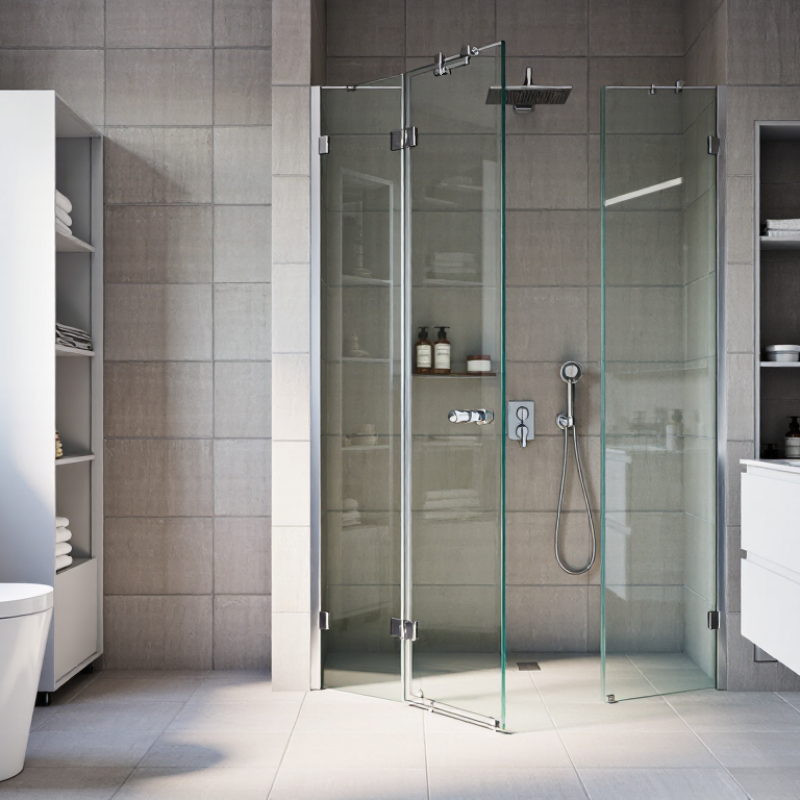
Pivot shower doors rotate on pivot hardware instead of sliding along a track. The pivot point is usually positioned near the door edge, allowing the panel to swing open and closed. Many models are designed to open outward, so the bathroom layout must provide sufficient clearance.
The chart shows representative nominal pivot-door widths commonly used in residential bathrooms. Actual product dimensions vary by installation type and manufacturer. Before purchasing, measure the finished opening at multiple points, confirm the available swing area, and check the required glass thickness, wall support, and waterproofing details.
Pivot Shower Door Types, Configurations, and Opening Styles
A pivot shower door rotates on hinges, making it different from sliding and bi-fold designs. Its opening style matters as much as its glass. A single pivot door suits a wide shower entry and creates a clean, open feel. A reversible pivot can swing inward or outward, but the bathroom layout must provide safe clearance. A center-pivot door divides the panel movement and may reduce the required swing area. Corner configurations often use a pivot door with a fixed side panel. They work well in compact bathrooms with angled or recessed walls.
Houzz’s 2024 U.S. Bathroom Trends Study reports that 84% of renovating homeowners upgrade their shower. That figure reflects strong demand for better access and more practical layouts. The NKBA’s 2024 Design Trends research also highlights aging-in-place features and accessible bathroom planning. These findings support wider openings, low thresholds, and handles that are easy to reach. Still, a wider door is not automatically better. Wall position, vanity clearance, and the user’s movement path must be measured together. Small errors become obvious when a glass edge meets a cabinet.
Tips: Mark the door swing on the floor with tape. Check both opening directions. Confirm hinge-side support before ordering. Measure finished wall surfaces, not rough framing. Tempered safety glass is essential, but installation quality still matters. A level floor and plumb walls influence sealing and smooth operation. I would not rely on a showroom display alone; real bathrooms rarely have perfectly square walls.
How to Measure Your Bathroom for a Pivot Shower Door
A pivot shower door can make a bathroom feel open, but accurate measuring determines whether it works.
The 2024 U.S. Houzz Bathroom Trends Study reports that many homeowners are upgrading showers, often changing size and layout. Measure before ordering, not after the tile is installed.
Record the opening width at the bottom, middle, and top. Use the smallest measurement.
Measure height from the finished threshold to the planned top edge. Account for tile, mortar, and wall panels.
A small error here can create a visible gap. Check both walls with a level.
Older bathrooms are rarely perfect. Mine would not pass a careful inspection. That matters because a pivot door needs stable, nearly plumb surfaces.
Mark the door swing with painter’s tape. Keep fixtures, towel bars, and cabinets outside its path.
NKBA bathroom planning guidance commonly uses a 30-inch minimum shower entry and 24 inches of door-clearance space. Local codes and product instructions may require more.
Confirm the finished opening, threshold slope, hinge-side reinforcement, and glass thickness with a qualified installer. Take photos and write every measurement down. Recheck after waterproofing. A rushed second measurement is still rushed.
Key Materials, Glass Options, Hardware, and Safety Features
Choosing the best pivot shower door in 2026 requires more than matching bathroom colors. Materials affect durability, maintenance, and long-term safety. Stainless steel and solid brass hardware resist moisture better than inexpensive plated alloys. However, even quality metal can corrode in poorly ventilated rooms. Check the wall structure before ordering. A beautiful door cannot compensate for weak support.
Glass selection changes the room’s appearance and daily comfort. Clear glass creates an open feel, while frosted or patterned glass offers more privacy. Tempered safety glass is essential because it breaks into smaller, less dangerous pieces under severe impact. Thicker glass usually feels more stable, but it also demands stronger hinges and accurate installation. I would not choose thickness alone. The frame, wall alignment, and door weight must work together.
Hardware should include corrosion-resistant pivot hinges, secure handles, and reliable magnetic seals. The door should swing smoothly without scraping the floor or nearby fixtures. Look for rounded edges and a stable threshold that limits water escape. A soft-closing mechanism can reduce sudden movement, especially in busy homes. Measure twice. Small errors matter. Safety also depends on professional installation, level walls, and regular checks for loose screws or damaged seals. No option is perfect, and overlooking ventilation remains an easy mistake.
How to Compare, Install, and Maintain the Best Pivot Shower Door
2026 Best Pivot Shower Door Buying Guide
Choosing a pivot shower door requires more than checking its appearance. Compare tempered glass thickness, frame strength, hinge quality, and seal design. Thicker glass feels more stable, but it also increases door weight. Measure the opening at several points, because tiled walls are rarely perfectly square. Check the pivot direction and required clearance before purchasing. A door that swings into a towel rail will become annoying quickly.
Installation should begin with a dry fit and careful marking. Use a level on both sides, then confirm the screw locations behind the tile. Proper wall anchors matter, especially in heavy wet-room construction. Keep the glass supported with padded blocks; never rest its edge directly on the floor. Apply compatible bathroom sealant only where the instructions allow it. Too much sealant looks untidy and can block drainage gaps. A small alignment error may leave the door rubbing against the frame.
Maintenance is simple but consistent. Wipe glass after bathing with a soft squeegee, then leave the door partly open for airflow. Clean hinges and tracks with mild soap, not abrasive powder. Inspect seals every few months for flattening, splitting, or movement. Replace worn seals early, since a small leak can damage grout and cabinetry. It is tempting to ignore a stiff pivot, but forcing it usually worsens the problem. Check the screws gently. Over-tightening can distort the frame.