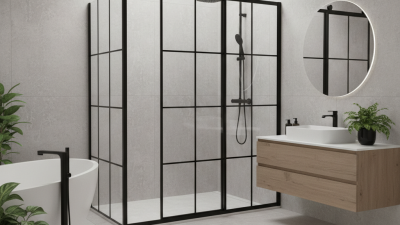
The China Top 10 Frameless Glass Shower Doors Manufacturers guide examines suppliers shaping modern bathroom interiors. Frameless Glass Shower Doors use thick tempered glass, precision hardware, and minimal visual barriers. They can make a compact bathroom feel brighter and larger. However, elegant appearance does not guarantee reliable performance.
Recent industry research supports this growing interest. Grand View Research reports continued expansion in the global shower doors market, driven by renovation activity, premium bathroom design, and urban housing development. Fortune Business Insights also identifies replacement demand and customized enclosures as important market drivers. These reports use different definitions and regions, so their market values should not be compared directly. That limitation matters.
Design preferences are changing, too. The 2024 U.S. Houzz Bathroom Trends Study highlights strong homeowner interest in upgraded showers, storage, and cleaner contemporary layouts. Similar expectations influence Chinese production and export markets. Yet product quality depends on more than appearance. Buyers should examine glass thickness, edge finishing, corrosion resistance, hardware load capacity, water sealing, and installation support. Relevant benchmarks may include ANSI Z97.1, CPSC 16 CFR 1201, and EN 12150, depending on the destination market.
This ranking considers manufacturing experience, product consistency, customization capability, export documentation, testing practices, and after-sales service. Factory audits and sample inspections remain valuable. Online claims can be incomplete. A lower quotation may conceal weaker hinges, uneven drilling, or limited warranty support. The selected manufacturers are strong reference points, not permanent winners. Buyer requirements differ, and careful verification is still necessary before placing a commercial order.
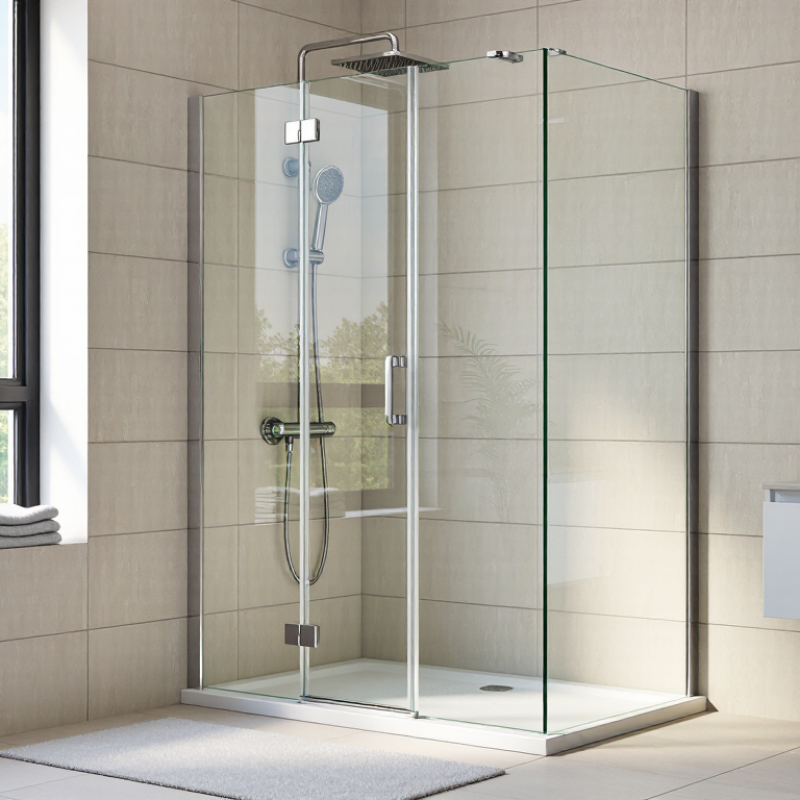
Frameless shower doors use thick tempered glass with minimal visible metal framing. Their edges rely on hinges, clamps, seals, and precise wall anchoring. The segment usually includes fixed panels, hinged doors, sliding systems, and corner enclosures. Semi-frameless products should remain separate. They use partial metal borders and serve a different price and installation category.
Fortune Business Insights valued the global shower enclosure market at about USD 6.68 billion in 2023. Its report projects growth to approximately USD 10.25 billion by 2030. Grand View Research also identifies renovation activity and premium bathroom design as important demand drivers. However, most reports combine framed, semi-frameless, and fully frameless products. Direct frameless figures are therefore less reliable. That boundary is imperfect.
For evaluating Chinese manufacturers, buyers should request segment-level evidence rather than broad market claims. Useful indicators include annual tempered-glass capacity, rejection rates, hardware corrosion testing, and documented installation warranty data. Glass thickness commonly ranges from 8 to 12 millimeters in premium frameless applications.
Door alignment matters. A two-millimeter error can create uneven gaps, water leakage, or hinge stress. Commercial projects often require stronger testing and repeatable dimensions than residential orders.
Reports from the International Code Council and regional safety authorities also emphasize certified safety glazing, though requirements vary by market. Product catalogs alone cannot prove compliance. Factory audits, batch records, and independent test certificates provide stronger evidence. Even then, installation quality remains a variable many market comparisons overlook.
China’s top frameless glass shower door manufacturers should treat safety as a design requirement, not a marketing phrase. Most quality doors use 8–12 mm tempered glass, balancing impact resistance, weight, and hardware stability. Thinner glass may flex more, while thicker glass adds weight and installation demands.
ANSI Z97.1 evaluates safety glazing performance through impact testing and fragmentation requirements. EN 12150 covers thermally toughened soda-lime silicate safety glass, including production and performance controls. These standards matter because tempered glass is designed to break into smaller granules instead of sharp, blade-like shards. Ask manufacturers for current test reports, glass markings, and traceable quality records. A certificate without matching product details deserves caution.
Installation remains equally important. A skilled team must check wall strength, accurate measurements, hinge alignment, edge protection, and door clearance. Small errors can create stress around drilled holes or clamps. That is where failure may begin. In practical inspections, the glass specification often looks excellent, but the supporting substrate is weak. This is an uncomfortable point. Standards cannot correct careless fitting. Buyers should also inspect packaging, corner protection, seal quality, and hardware compatibility before shipment. Some specifications are presented too confidently, and I would question any supplier promising absolute safety. Good manufacturers explain limitations clearly, provide installation guidance, and support inspection at each production stage.
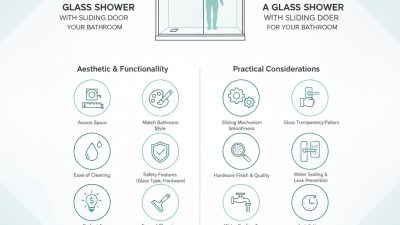
The chart presents common nominal thickness options for frameless shower-door panels: 8 mm, 10 mm, and 12 mm tempered glass. ANSI Z97.1 and EN 12150 are safety-glazing standards referenced for impact performance and thermally toughened glass quality; neither standard independently mandates one specific shower-door thickness. Final thickness selection should consider panel size, hardware design, installation method, and local building requirements.
China Top 10 Frameless Glass Shower Doors Manufacturers
When comparing China’s top frameless glass shower door manufacturers, production capacity deserves careful attention. A large factory may operate several tempering lines, CNC cutting machines, and dedicated assembly teams. Smaller facilities may offer better flexibility for custom sizes. Buyers should request monthly capacity, current utilization, and lead times, not only annual claims. A practical audit checks glass thickness, edge polishing, hole placement, and packaging strength.
Export data can reveal operating experience. Ask for shipment destinations, container volume, and experience with fragile sanitary products. However, customs records may be incomplete or delayed. Public figures are not always consistent. Treat them as evidence, not proof. Request recent loading photos, sample packing lists, and references from comparable projects.
Certifications should match the target market and product scope. Common documents include ISO 9001, tempered-glass test reports, and hardware compliance records. Certification names alone are insufficient. Verify issuing bodies, test dates, and model coverage. MOQ also affects project cost. Standard doors may start near 20 to 50 sets, while custom finishes can require higher quantities. Confirm whether the MOQ applies per size, color, or shipment. One overlooked detail can create expensive leftover stock.
| Rank | Manufacturer Profile | Estimated Annual Capacity | Main Export Regions | Typical Export Share | Common Product Specifications | Frequently Available Certifications | Typical MOQ | Typical Lead Time |
|---|---|---|---|---|---|---|---|---|
| 1 | Large integrated glass-processing facility | 80,000–150,000 sets/year | North America, Europe, Australia, Middle East | 60%–80% | 8–12 mm tempered glass; stainless-steel or brass hardware; custom sizes | ANSI Z97.1 EN 12150 ISO 9001 | 50–100 sets | 25–40 days |
| 2 | High-volume shower enclosure specialist | 60,000–120,000 sets/year | United States, Canada, United Kingdom, Germany | 55%–75% | Frameless pivot, sliding, and hinged doors; clear and low-iron glass | ANSI Z97.1 CE-related compliance ISO 9001 | 50–100 sets | 30–45 days |
| 3 | OEM/ODM bathroom hardware and glass manufacturer | 45,000–90,000 sets/year | Australia, New Zealand, Southeast Asia, Europe | 50%–70% | 6–10 mm tempered glass; brushed, polished, matte-black, and gold finishes | EN 12150 ISO 9001 RoHS for selected hardware | 30–80 sets | 25–40 days |
| 4 | Architectural glass fabrication plant | 40,000–85,000 sets/year | Europe, Middle East, South America | 45%–65% | Large-format panels, custom cut-outs, nano-coated and laminated options | EN 12150 EN 14428 ISO 9001 | 20–50 sets | 30–50 days |
| 5 | Mid-to-large bathroom products exporter | 35,000–75,000 sets/year | North America, Europe, Africa, Middle East | 50%–70% | Standard and semi-custom frameless doors; matching shower screens | ANSI Z97.1 CE-related compliance ISO 9001 | 50–100 sets | 25–45 days |
| 6 | Custom shower door and enclosure factory | 25,000–60,000 sets/year | United States, Canada, Australia, United Kingdom | 55%–75% | Hinged, bypass, neo-angle, and walk-in configurations | ANSI Z97.1 EN 12150 Factory inspection reports | 20–50 sets | 30–45 days |
| 7 | Specialized tempered-glass door producer | 20,000–55,000 sets/year | Southeast Asia, South Asia, Middle East, Africa | 40%–60% | 8–10 mm clear tempered glass; standard hardware combinations | EN 12150 ISO 9001 Material test reports | 30–60 sets | 25–40 days |
| 8 | Small-to-mid-sized flexible OEM supplier | 15,000–40,000 sets/year | Europe, North America, Southeast Asia | 45%–65% | Private-label production; flexible glass, hardware, and packaging options | EN 12150 CE-related compliance ISO 9001 or equivalent QMS | 10–30 sets | 30–50 days |
| 9 | Project-oriented enclosure manufacturer | 12,000–35,000 sets/year | Middle East, Africa, South America, Eastern Europe | 35%–55% | Hotel, residential, and commercial project packages; custom dimensions | EN 12150 EN 14428 Product inspection reports | 10–30 sets | 35–55 days |
| 10 | Boutique custom-design glass supplier | 8,000–25,000 sets/year | Australia, Europe, North America, Asia-Pacific | 30%–50% | Low-volume customized designs; coated glass and premium hardware options | ANSI Z97.1 EN 12150 Factory quality inspection | 5–20 sets | 35–60 days |
Note: Capacity, export-share, MOQ, and lead-time figures are market-range estimates for anonymous manufacturer profiles based on commonly published supplier capabilities and international sourcing practices. Certification availability depends on the specific product model, destination market, and current documentation; buyers should request valid certificates, test reports, and factory audit records before placing an order.
China’s top 10 frameless glass shower door manufacturers should be compared through measurable factory evidence, not showroom appearance. ANSI Z97.1 requires safety glazing to pass impact testing, while ASTM C1048 covers heat-treated glass quality. Ask for batch records, fragmentation results, and thickness reports. A 10 mm panel should show consistent thickness across measured points. Small deviations can affect alignment.
Lead time needs a written definition. Some factories quote production time only, excluding drawing approval, glass inspection, and export handling. Request a timeline with each stage. A practical benchmark is 15–30 working days for standard orders, while customized hardware or unusual sizes may require longer.
The 2024 Houzz U.S. Bathroom Trends Study reported that shower upgrades remain a major renovation priority, increasing pressure on reliable supply and installation scheduling.
Tips: Request three recent delivery records. Check promised versus actual dates. For hardware, inspect corrosion resistance, load testing, screw quality, and hinge movement after repeated cycles. Warranty comparisons should include coverage length, excluded damage, replacement response time, and spare-part availability. A two-year warranty may look strong, but a 72-hour response target is more useful. Industry maintenance guidance often recommends checking seals and fasteners every six months. This is practical, though not always followed. Factory audits should also review corrective-action reports. One uncomfortable question matters: does the supplier measure defects after installation, or only before shipment?
For procurement, price should be compared by specification, not by headline quotation. A standard 8–10 mm tempered glass door may cost about $180–$450 FOB, excluding installation and local taxes. Custom sizes, low-iron glass, special coatings, and upgraded hinges can raise the price quickly. Request a line-by-line quotation covering glass, hardware, packaging, testing, and spare parts. Small details matter.
Customization needs written control. Confirm drawings, opening measurements, glass tolerance, edge treatment, hinge load, finish, and carton protection before production. Ask for a sample or approved digital drawing. One practical mistake is accepting “standard hardware” without defining its material and surface treatment. That phrase is too vague. Stainless steel grade, corrosion resistance, and replacement availability should be recorded in the purchase contract.
Factory audits should examine cutting areas, tempering records, inspection stations, worker training, and corrective-action files. Check whether the supplier can trace each glass batch to an inspection report. Request evidence of relevant product testing and market-specific compliance. UN Comtrade data can support market research, but HS code selection differs by country, and mirror statistics may not match. Treat the figures as directional, not absolute. My first comparison sheet looked precise, yet it ignored freight, breakage risk, and port charges. That was a costly gap. Use three comparable quotations and verify every assumption.